
Lot Clearing for a House Site in Albemarle County & Charlottesville
Clearing a lot to build a house in Albemarle County is more than cutting trees. Stumps and roots have to come out of the footprint, the ground has to be graded, the debris has to go somewhere (and in Albemarle, burning it is hard), the county wants erosion controls in place, and the septic drainfield has to be kept safe from the machines doing the work. On hilly ground, slope and stream rules can decide where the house goes in the first place. Here's what the job involves and what to settle before the first machine shows up.
Pick the spot before you clear it
On a lot of Albemarle land, the rules help decide where the house can go, so it pays to know them before trees come down:
- Slopes of 25 percent or more are "critical slopes" under Zoning § 18-4.2. Structures and the land disturbance to build them aren't allowed there unless an exception applies. The first house on an existing lot is exempt, but if the lot has room off the critical slopes, the house has to go there. In the Development Areas, a steep slopes overlay sorts slopes into "managed" and "preserved" instead.
- The septic drainfield usually decides more than the house does. The county asks the Health Department to discourage septic systems on slopes of 20 percent or more, and the drainfield needs suitable soil, so the soil evaluation comes before the clearing plan.
- Streams. Since September 1, 2026, Albemarle's riparian buffer standards keep native vegetation within roughly 100 feet of most streams, and a driveway crossing needs county approval. The county presumes one crossing per lot is enough.
- Conservation easements often limit where buildings can go and may require the holder's approval before construction. If your land is eased, read the deed first.
A good sequence: survey, soil evaluation and septic permit, then site the house, drive, well, and drainfield, then clear. Clearing first and finding out the drainfield has to go where you just ran an excavator is an expensive way to learn.
What clearing a house site involves
- Layout. The house footprint, driveway, well, and drainfield (with its reserve area) are staked. Trees to keep and lines not to cross are flagged.
- Timber comes down. If there's enough merchantable hardwood or pine, a logger may buy it first and leave the stumps and tops.
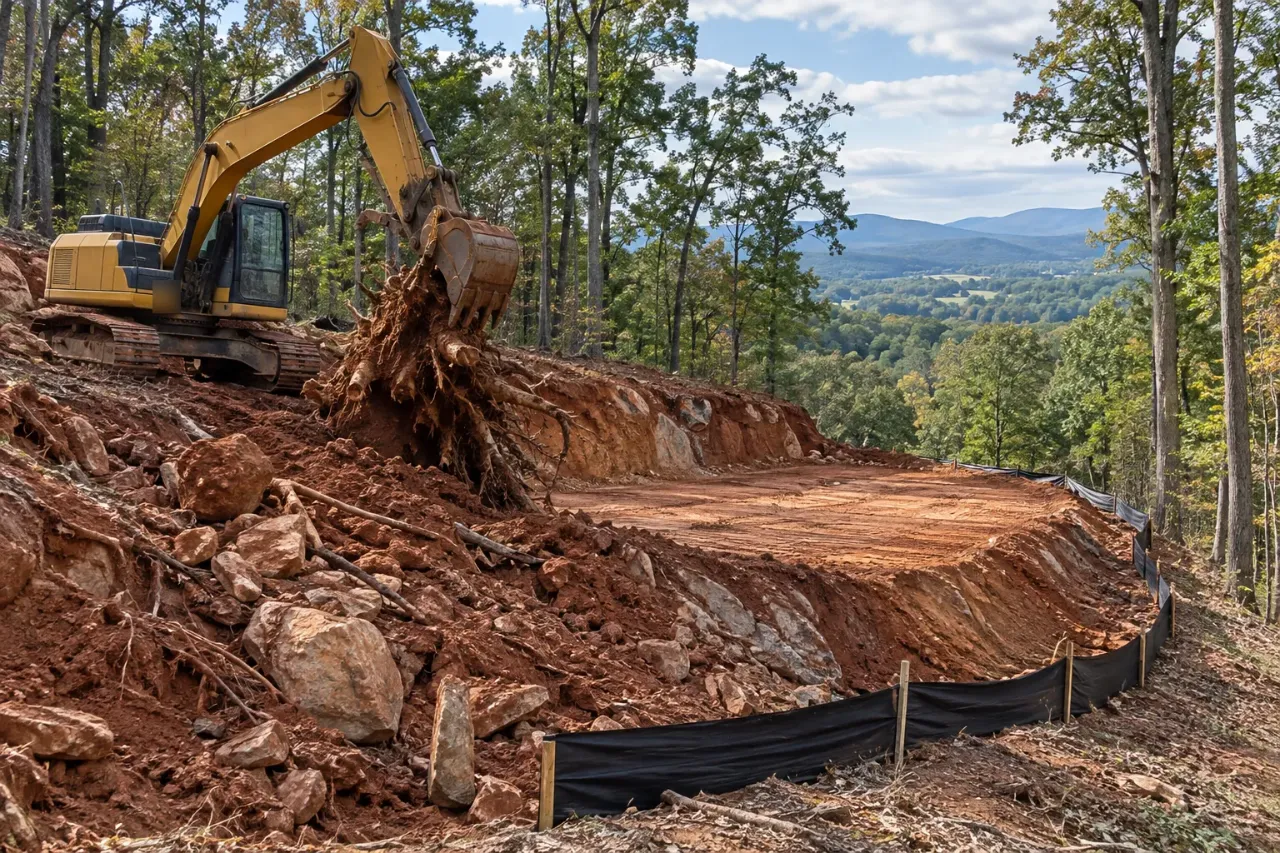
- Grubbing. An excavator or dozer pulls stumps and major roots out of the footprint. Virginia Cooperative Extension notes that dozer grubbing nearly always destroys the topsoil, while an excavator with a root rake disturbs less. Ask which the contractor will use, and where the topsoil ends up.
- Debris. Stumps, roots, and brush are ground, mulched, hauled off, or, less often in Albemarle, burned. This is often the biggest line on the quote.
- Erosion controls. A stone construction entrance where the drive meets the road and silt fence on the downhill side, per the county's plan or agreement.
- Rough grading. The pad and drive are shaped, and stump holes are filled and compacted so they don't settle later.
- Stabilizing. Disturbed ground outside the pad gets topsoil, seed, and straw. Albemarle's ordinance has a section titled "Duty to stabilize denuded areas with permanent vegetation within nine months after commencing land-disturbing activity" (County Code § 17-808).
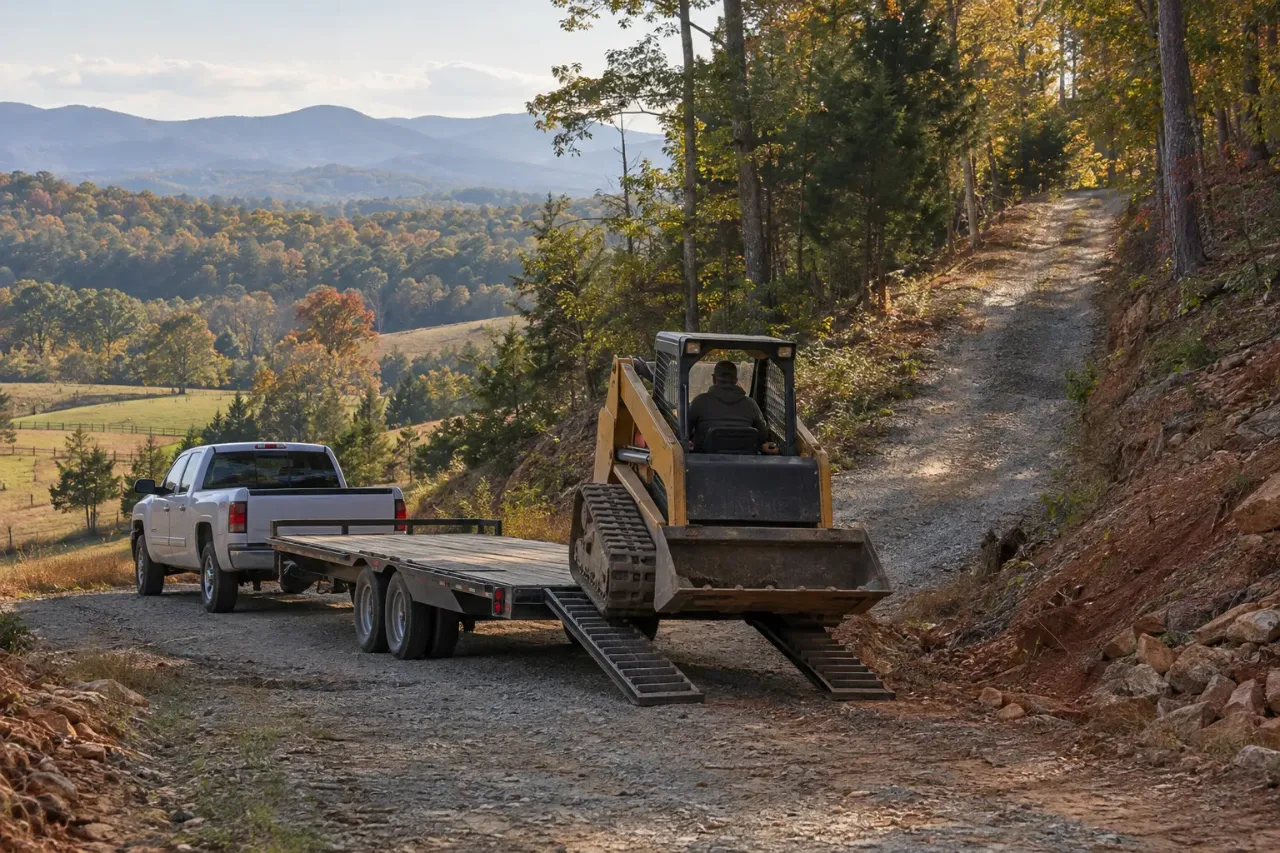
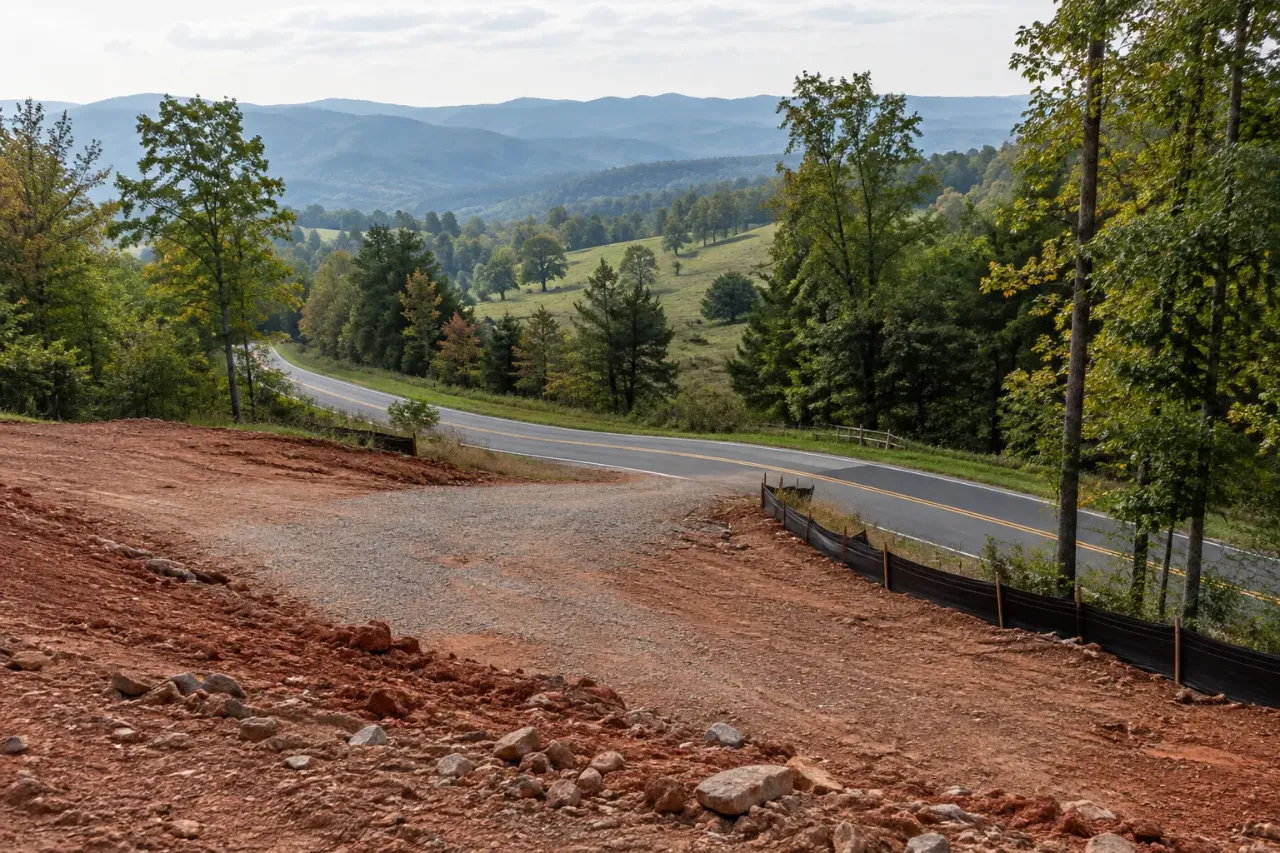
On a wooded parcel, many owners mulch the rest of the acreage and grub only the footprint. It keeps the cost down, keeps the soil in place on the slopes, and leaves nothing to burn.
The county's 10,000 square foot line
Nearly every house site crosses it. A pad, a drive, and a drainfield add up to well over 10,000 square feet of disturbed ground, which is where Albemarle requires an application, an erosion and sediment control plan, and a land disturbance permit (County Code § 17-300).
- Lots of one acre or less: a single-family home can usually use an agreement in lieu of a plan, a written contract with the county covering the erosion controls, with a Critical Resources Plan attached (§ 17-402). It isn't available where the work would disturb a stream channel or likely send sediment into a stream or onto a neighbor.
- Lots over an acre: a full erosion and sediment control plan. The county's fee for a sole single-family dwelling disturbing under five acres is $235, including the first year's maintenance fee, plus a 4 percent technology surcharge.
- One acre or more of disturbance brings in state construction stormwater coverage from DEQ, though DEQ says a single-family home that's a small construction activity doesn't file the usual registration statement.
- In the City of Charlottesville, the line is 6,000 square feet, and no disturbance can start until the City approves it. The City offers its own agreement in lieu for single-family homes.
Your builder usually handles this with the building permit. If you're clearing before you've picked a builder, make sure the clearing contractor and the county are on the same page first. The permits guide has the details and phone numbers.
Keep the machines off the drainfield
If your house will be on a septic system, the drainfield is the most fragile part of the whole project, and clearing is when it's most at risk. Virginia's sewage regulations (12VAC5-610-700) call for special caution about wheeled and tracked vehicles crossing the absorption area, because compaction damages the soil structure the system depends on; damage can be grounds to reject the site or revoke the permit. Nothing may be built over it, the area has to be staked before final grading, and every system needs a reserve area held back for a future replacement.
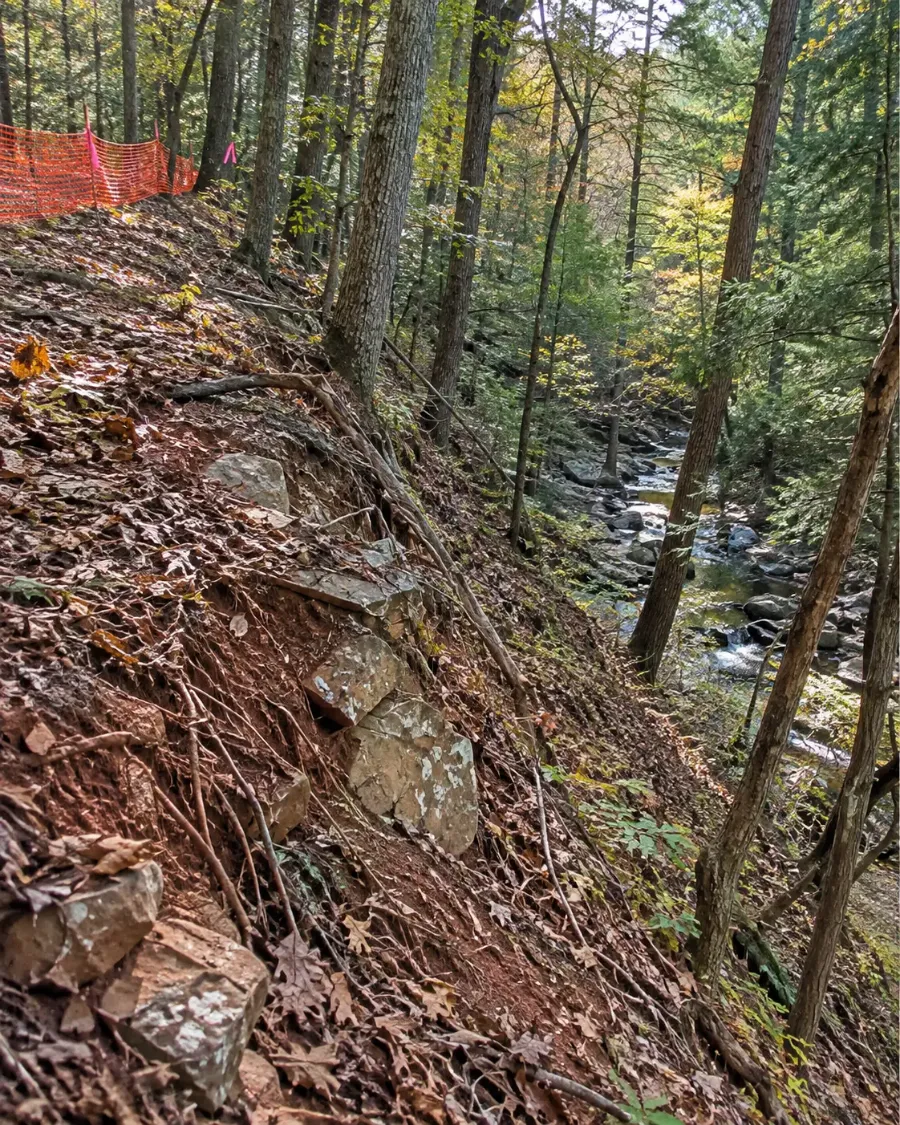
In practice: get the soil evaluation and septic permit first, stake the drainfield and reserve area and fence them with orange safety fence, and tell the clearing contractor in writing that no equipment crosses them. Trees inside the drainfield area are usually cut and left or ground at the stump, not pulled. On a sloping Albemarle lot where good drainfield soil is scarce, losing it to a tracked machine can mean redesigning the whole site.
What to do with the debris
A cleared acre of mature woods produces a lot of stumps, tops, and brush, and the choice of what to do with it moves the price more than almost anything else.
- Burn on site. Cheapest where it's allowed, and in Albemarle it often isn't practical. The county's land-clearing burn permit costs $500, requires $1.5 million in liability insurance, and requires piles 2,000 feet from any neighbor's occupied building unless they agree in writing, with burning only on weekdays and never February 15 through April 30. In the City, land-clearing burns are prohibited.
- Grind or mulch. A tub or horizontal grinder turns the pile into chips you can spread or keep, and a mulcher can handle the brush and small trees in place. More than burning, far less than hauling, no permit.
- Bury. Sometimes done in a pit on the property. Extension warns the hole sinks as the wood rots, so never under anything you'll build or drive on.
- Haul. The cleanest and most expensive option. National guides put hauling at hundreds of dollars per load, and a wooded acre is many loads.
What lot clearing costs
Lots vary too much for one number. Angi's September 2026 data puts lightly wooded clearing at $500 to $2,000 per acre and dense woods at $3,600 to $5,600, with an average project around $3,780. HomeGuide's late-2025 figures run $1,200 to $2,500 for light growth, $2,500 to $4,500 for moderate, and $4,500 to $8,000 for heavy timber. A Virginia contractor's 2026 price page says most Virginia landowners pay $1,500 to $6,500 per acre. On Albemarle house sites, slope, rock, debris disposal, and erosion controls are what push a job toward the top of those ranges.
Those are national and statewide figures, not Charlottesville or Albemarle quotes. The written quote from a contractor who has walked your lot is the number that counts. The cost guide explains how to compare quotes that aren't written the same way.
What commonly goes wrong
- Equipment on the drainfield. Compaction can cost you the septic site, and on a hilly lot there may not be another one.
- Clearing into the stream buffer. Albemarle's buffer standards apply whether or not you're building, and previous clearing doesn't shrink the buffer.
- Siting the house on a critical slope when the lot had room elsewhere. The first-house exemption only applies when there's no better spot.
- Stump holes filled with stumps. Buried wood rots, and the pad or drive settles over it years later. Holes in the footprint should be filled with compacted soil.
- Topsoil pushed into the debris pile. You end up buying it back for the lawn. Ask that it be stockpiled.
- Planning to burn without checking the setback. A quote that assumes burning isn't worth much if the nearest neighbor is closer than 2,000 feet.
- No silt fence until the inspector asks. One hard storm on bare red clay sends your topsoil downhill.
- Nobody called 811. Grubbing is excavation. Virginia 811 locates are free and take up to three working days.
- Keeper trees killed by root damage. An excavator working inside a tree's drip line can kill a tree that looks fine for two more summers.
Before the equipment arrives: a checklist
- Property corners found, and lines flagged where clearing runs close to them.
- Soil evaluation done and septic permit in hand, or at least the drainfield sited.
- House, drive, well, drainfield, and reserve area staked; drainfield and reserve fenced off.
- Stream buffers and slopes of 25 percent or more marked, if the lot has them.
- Easement deed read and the holder contacted, if the land is eased.
- Trees to keep flagged, and an agreement on how close equipment will work to them.
- County land disturbance paperwork settled, or the builder confirmed to be handling it.
- Virginia 811 locate requested at least three working days ahead.
- Debris plan chosen: mulch, grind, haul, or, if the setback allows, burn with the county permit.
- A written quote that says what's included: grubbing depth, debris, grading, topsoil, seeding, and erosion controls.
House site questions
Can I clear the lot myself?
Virginia's contractor licensing law exempts an owner working on the primary residence they own and live in, and county permits are issued to owners. But grubbing and grading a house site, especially a sloping one, is heavy-equipment work with real risk, and the erosion, buffer, and drainfield rules apply to you exactly as they would to a contractor.
Should I sell the timber first?
If there's a real stand of sawtimber hardwood or pine, possibly. Small lots and scattered trees usually aren't worth a logger's trip. The Virginia Department of Forestry's selling timber guidance covers how to sell and says never to use a verbal agreement, and consulting foresters in the Charlottesville area can tell you what the trees are worth. Note that Albemarle's land disturbance rules cover timber harvesting unless the land is replanted or turned into farm use, so a harvest that's really the first step of a house site isn't automatically exempt.
How long does it take?
Clearing and grubbing a one- or two-acre site is often a few days of machine work, plus time for debris and any wait for dry weather. The permits and septic work up front usually take longer than the clearing.
What about a long driveway?
A drive through the woods is its own clearing job and counts toward the 10,000 square feet. On a sloping lot it may also need grading and culverts, and if it crosses a stream, the county's buffer administrator has to approve the crossing.
How we help
Call or send a short request and tell us about the lot. We connect you with one independent contractor who clears and grades house sites in your part of Albemarle or Charlottesville. They walk the property and give you a written quote, and you decide. There's no charge for the referral.
Want a local contractor to walk your land?
Call or send a short request. There's no charge for the referral.