
Clearing for a View in Albemarle County, VA
Plenty of Albemarle properties have a Blue Ridge or valley view hiding behind a wall of trees, and opening it up is one of the most common reasons people call about clearing here. Done well, view clearing is selective: thin the understory, take out the handful of trees actually in the way, and keep the slope, the privacy, and the big trees. Done badly, it's a bare hillside that washes every time it rains, and sometimes a violation. Here's how it's done and what the county's rules allow.
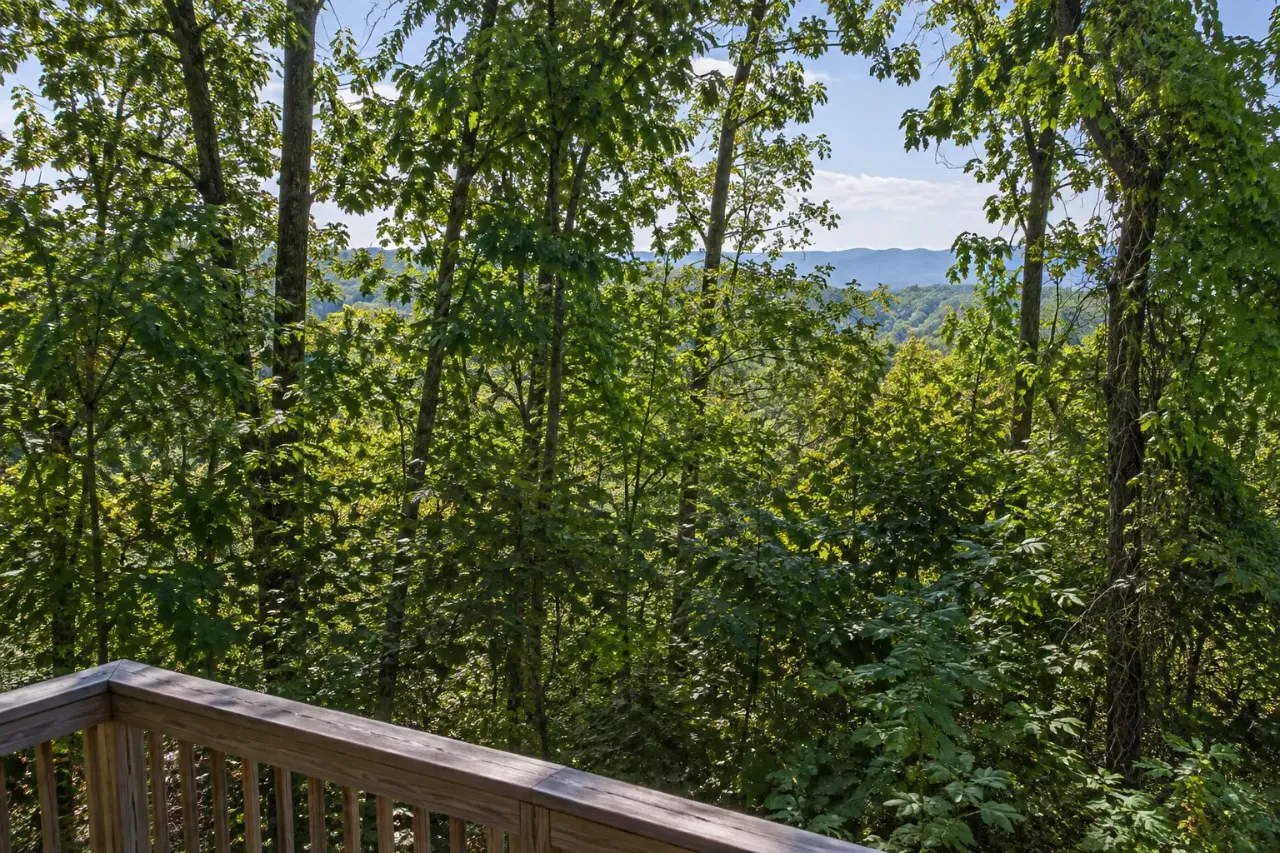
Start with what's actually blocking the view
Stand where you want to see from, in summer if you can, because the view you get in January through bare branches can disappear once the hardwoods leaf out. Then look at what's in the way. It's usually one of three things, and each has a different fix:
- Understory. Saplings, cedar, briars, and invasive shrubs filling in below the big trees. A forestry mulcher clears this in place, leaves the roots holding the soil, and leaves the large trees standing. On many lots this alone opens a surprising amount of view.
- A few trees in the sight line. Often it's five or ten trees, not a forest. Taking out only those keeps the slope wooded and the view framed.
- Lower limbs and crowns. Sometimes the trees can stay. Raising the lower branches or thinning a crown, often called vista pruning or windowing, is tree-service work done by climbers or from a bucket truck, not a land clearing job.
Clearing everything downhill of the house is rarely the best answer. You lose privacy, you trade a view of the mountains for a view of the neighbor's roof, and you take the roots off a slope that needs them.
What the rules allow
View clearing runs into more of Albemarle's rules than most people expect:
- Stream buffers. Since September 1, 2026, Albemarle's riparian buffer standards keep native vegetation within roughly 100 feet of most streams, development or not. The county's summary says the standards generally don't allow "removing trees or shrubs to create views or sightlines." If the view you want is down toward a creek, the buffer is the line. Dead or diseased trees, hazards, and invasive plants can still be removed.
- The 15-foot stream rule. Separately, no tree within 15 feet of a perennial stream or water supply reservoir may be cut, except dead trees and trees under 6 inches across (Zoning § 18-4.3). Along the Moormans River, a scenic stream overlay adds its own tree protection.
- Zoning outside the Rural Area. If your land is in a residential or other non-rural district, the same zoning section limits tree cutting to dead trees and trees under 6 inches unless it's part of an approved use. Ask Albemarle Zoning before cutting larger trees there.
- Land disturbance. Cutting trees and leaving the stumps isn't the same as grubbing. If the work pulls stumps or grades more than 10,000 square feet, it needs a county land disturbance permit (6,000 in the City).
- Conservation easements. About a quarter of Albemarle's Rural Area is under easement, and some deeds limit tree cutting or require the holder's approval for timber harvesting. Read yours before you mark a single tree.
- Your trees only. A neighbor's trees aren't yours to cut or top, even if they block your view. That's a conversation, not a clearing job.
The permits guide covers each of these with links and phone numbers. When a stream or steep ground is involved, call the county at 434-296-5832 before work starts.
Keep the hillside where it is
Most views worth opening are downhill, and Albemarle has a lot of steep ground; by our tally of USDA soil survey data, roughly a fifth of the county is mapped on slopes of 25 percent or more. Albemarle's own steep slopes ordinance names the risks of disturbing them: movement of soil and rock, excessive runoff, and siltation. The practical lessons:
- Leave stumps and roots on slopes. Cut or mulch, don't grub. The roots keep holding the soil while new ground cover comes in.
- Keep the ground covered. A mulch layer, leaf litter, or seed and straw; never bare clay heading into a summer thunderstorm.
- Mind the machine. Tracked mulchers have slope limits; a U.S. Forest Service equipment trial reported a contractor maximum around 25 percent. The steepest pitches are hand-crew work.
- Expect sprouts. Cut hardwoods sprout back, and a view opened by cutting red maple, sweetgum, or locust will need maintenance every few years. Plan for it rather than being surprised.
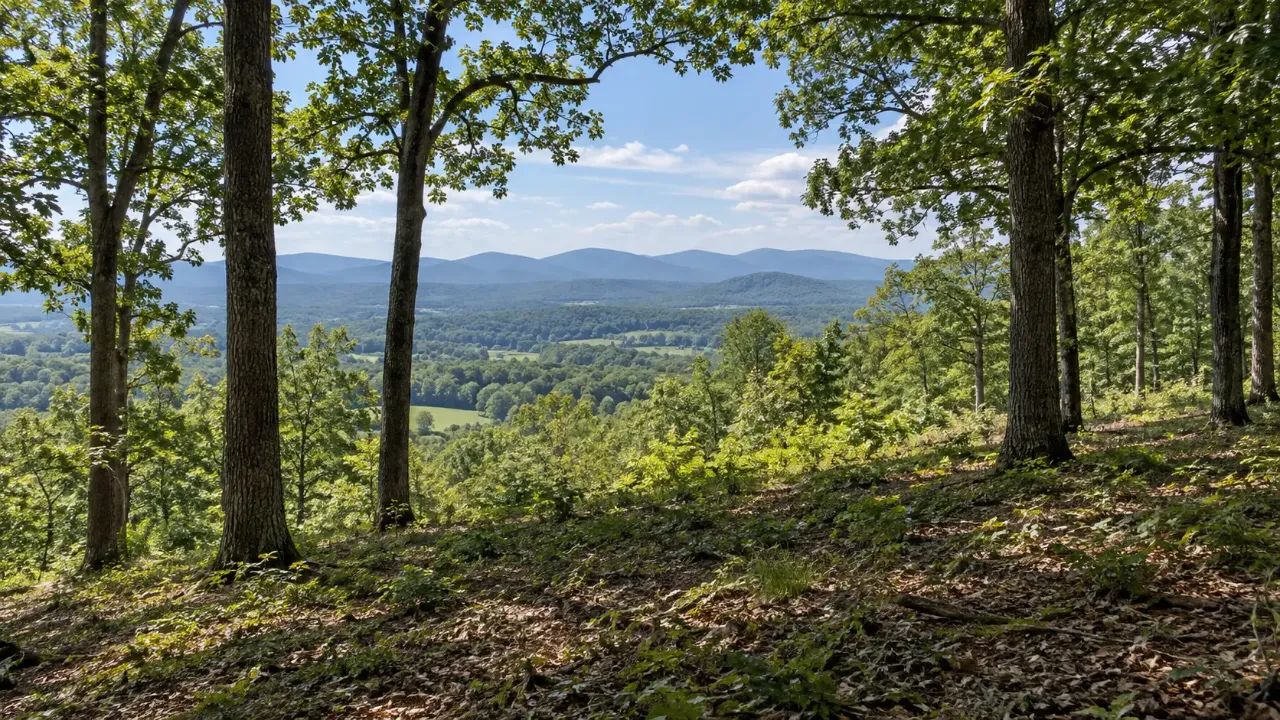
Do it in stages
You can always cut another tree next year; you can't put one back. The jobs owners are happiest with tend to go like this:
- Mark the view corridor from the spot you'll actually look from: the porch, the kitchen window, the deck.
- Flag the keepers: big healthy trees, the trees that screen neighbors and the road, and anything holding a steep bank.
- Clear the understory first and look again. Often that's most of the view.
- Remove or prune the specific trees still in the way, the fewest that get the job done.
- Live with it through a summer before deciding whether to open more.
Who does view clearing, and what it costs
Understory work and opening up acreage is a mulching contractor's job. Taking down individual large trees on a slope, especially near a house, and pruning for a view are tree-service work. Many view jobs use both, and a land clearing contractor may bring in a tree crew for the big trees. Who clears land explains the licenses and insurance to ask about.
Because it's selective, view clearing is usually priced by the day or hour rather than by the acre, and it goes slower than clearing everything, since the operator is working around what stays. Steep ground, access for the machine, and how much tree work is involved set the number. The cost guide lists published machine and per-acre rates for reference; the quote from someone who has stood on your porch and looked is the one that counts.
View clearing questions
Will my view disappear in the summer?
If it's through hardwoods, partly or completely. A winter view through bare branches is a different thing from a summer view. Look in leaf-on season before deciding what to cut, or plan the corridor around where the leaves will be.
Can I clear so I can see the creek?
Generally not inside the stream buffer. Albemarle's buffer standards keep native vegetation within about 100 feet of most streams, and the county says they don't allow removing trees or shrubs just to create views. You can remove dead or hazardous trees and invasive plants. Already-mowed areas can stay mowed, but can't be expanded.
When is the best time of year?
Late fall through winter is popular: the ground is usually firmer, you can see the shape of the land and the trees, and nothing is nesting. Just remember to check the view again once the leaves are out.
What about the neighbor's trees?
They're the neighbor's. Some neighbors will agree to selective work if you pay for it and they get a say; that's a written agreement between the two of you, never a contractor's call.
Do I need a permit to cut a few trees for a view?
Cutting a few trees and leaving the stumps usually stays well under the county's 10,000 square foot land disturbance threshold, and we didn't find a general tree-cutting permit for Rural Areas land. Buffers, the 15-foot stream rule, non-rural zoning districts, and easement deeds are where the limits are. If any of those touch your property, call the county first.
How we help
Call or send a short request telling us where the property is, what you want to see, and whether there's a creek or steep ground between you and the view. We connect you with one independent contractor who does selective clearing in your part of Albemarle. They walk it with you and give you a quote, and you decide. There's no charge for the referral.
Want a local contractor to walk your land?
Call or send a short request. There's no charge for the referral.